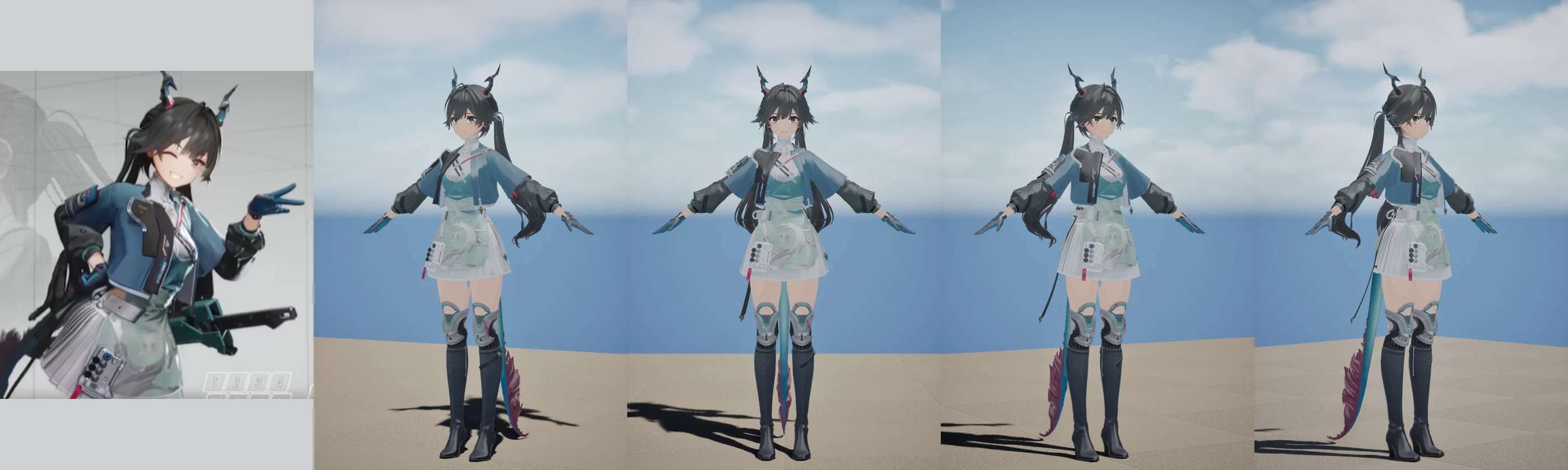
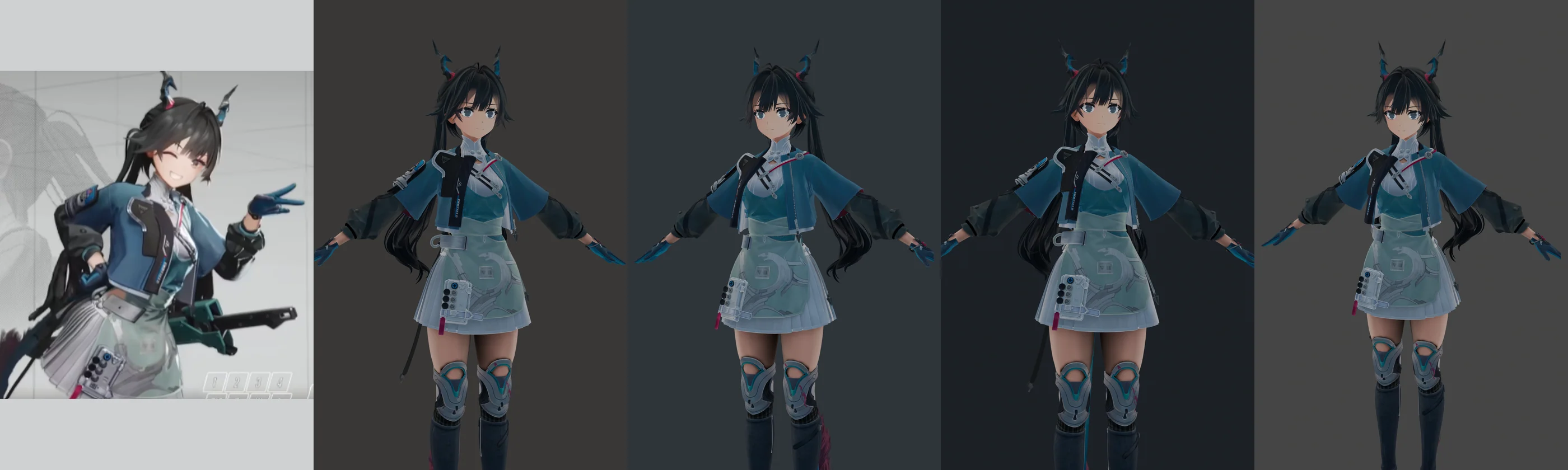
Visual Target
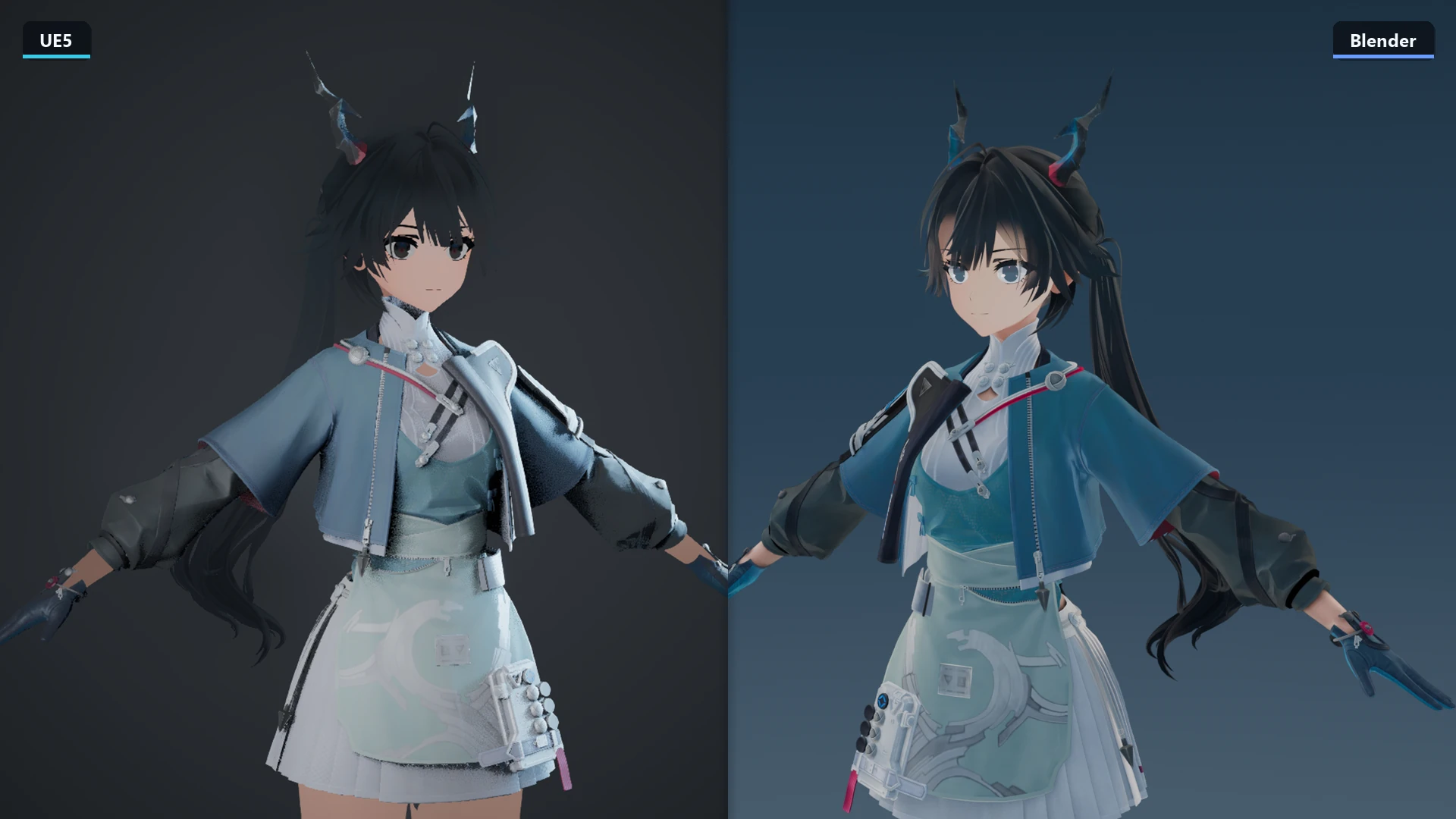
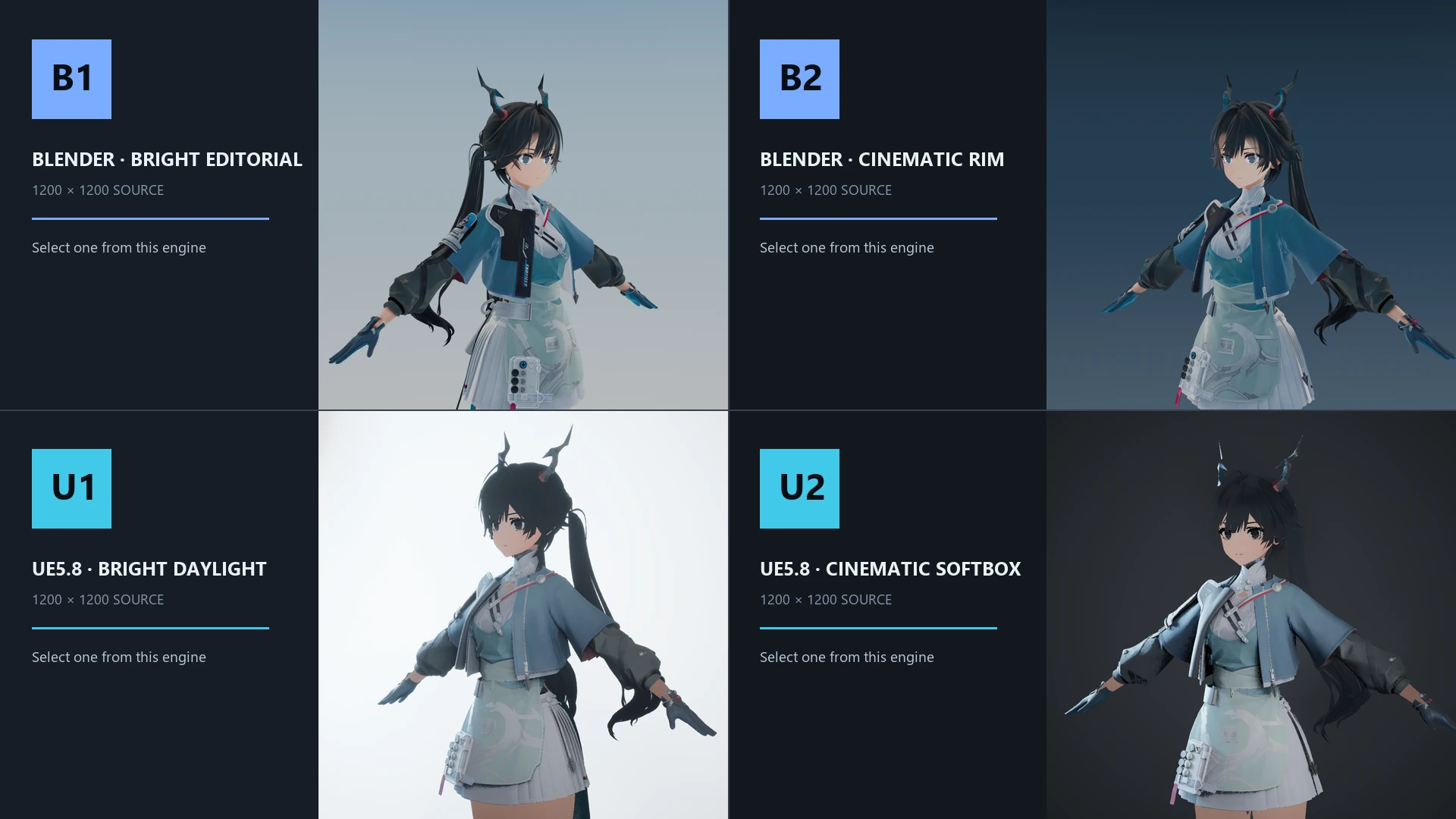
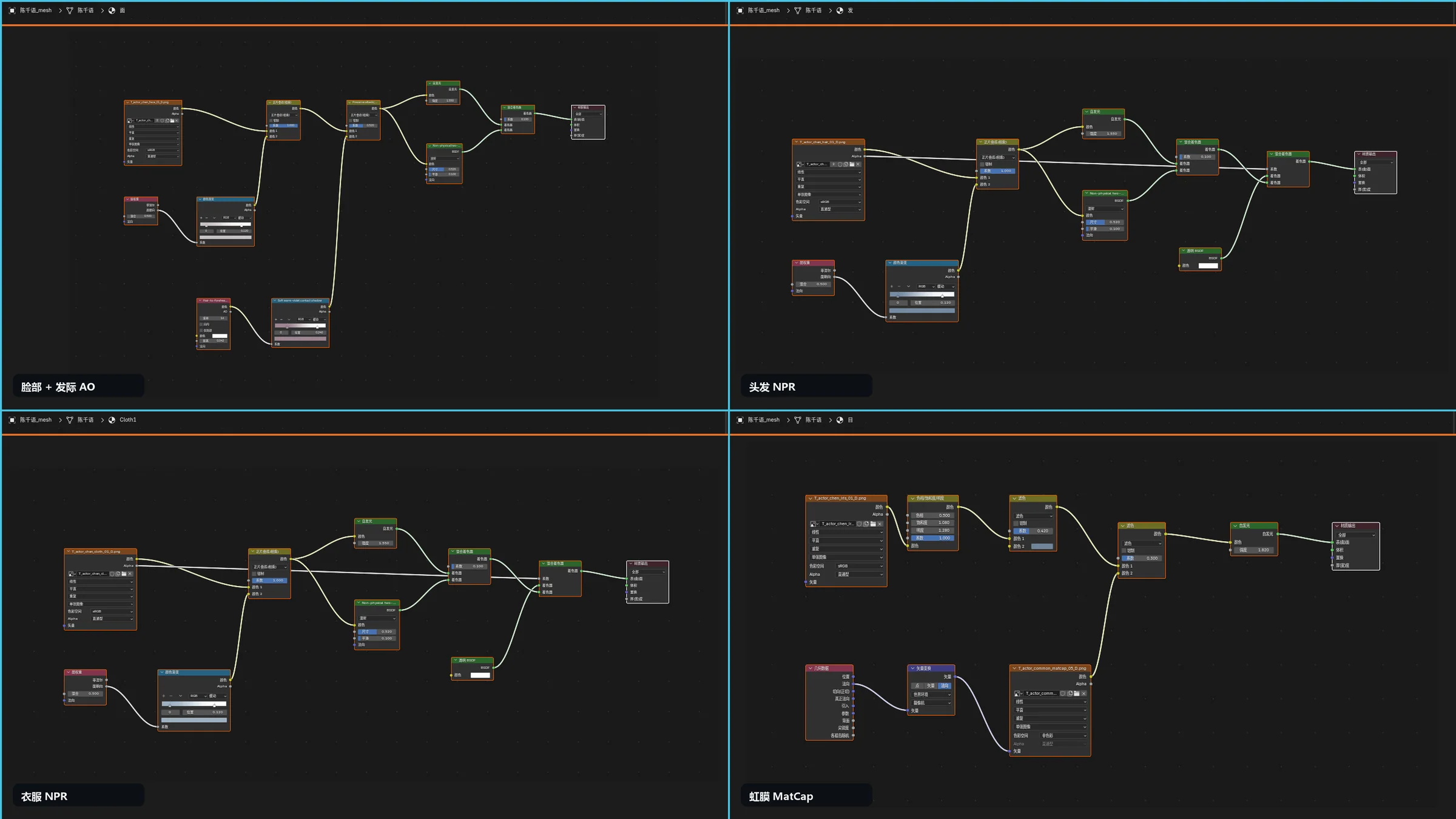
To validate how an Endfield-style character could be reproduced across realtime and offline rendering environments, I built, tested, and froze two Hybrid NPR solutions in UE5.8 and Blender. The result is a repeatable cross-engine method that preserves a consistent visual style while balancing anime-inspired presentation, PBR material detail, and efficient batch output.
Unreal Engine 5.8
In the UE5.8 realtime environment, I needed to address overly heavy facial shadows, lost clothing texture, and insufficient anime readability. I built the solution around the view-dependent NPR approach that most closely matched the original game's visual direction, softening facial and hair tonal steps, retaining PBR detail on the body, and unifying skylight, rim light, and post-processing. The final setup balances realtime performance, material information, and stable results across multiple viewing angles.
Blender Cycles
In Blender Cycles, I needed to establish a high-quality offline benchmark closer to the game's key art. I used a Hybrid path with NPR for the face and hair and PBR for the body, unpacked combined texture maps, corrected transparent hair and outlines, and added soft warm lighting. The final render preserves accurate color, restrained contours, and complete material detail.